
Mabh Savage
Words and the world passing by; how it sings to me; how I clamour back.
Book review: Pagan Portals: Moon Magic by Rachel Patterson
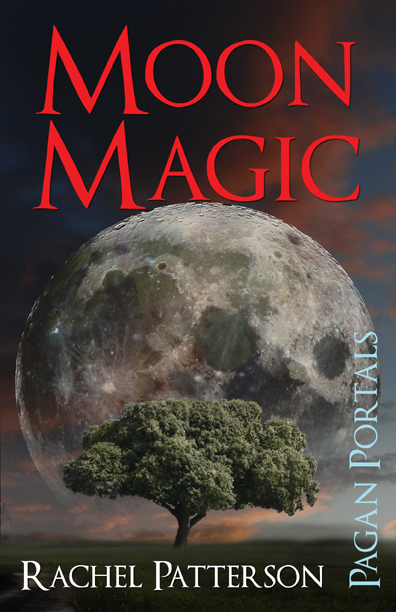
“Moon Magic is an introduction to working with the phases of the Moon, what they are and how to live in harmony with the lunar year and to utilise all the magical powers it provides. It’s filled with the basics of the lunar cycle, the representations and correspondences of each phase, what magic to work and when and also includes a look at the lunar year, moon deities, moon spells, meditations, specific moon rituals, moon names, tree moons and moon recipes.”
Published by Moon Books
Pagan Portals is, as the name suggests, a series of books (by various authors) with the aim of introducing various aspects of Paganism. Moon Magic seems a staple in this diet, as there are few branches of Paganism that don’t require at least some familiarity with the cycles of the moon. My initial concern is that this book may have little to offer the experienced practitioner. Just looking at the contents page dispels these fears instantly. Not only does Rachel (also known as Tansy Firedragon) cover what I would think of as ‘The Basic’ such as the phases of the moon, Esbats and some of the more well-known moon rituals, she also brings a fascinating amount of detail including working with cords, charms and supernatural creatures.
So rubbing my hands together gleefully at the prospect of learning something new about my favourite satellite, I dive right in. Rachel writes in an accessible style that is very inclusive to readers of all aptitudes. Facts are listed in well written, easy to consume bites, and each section that stems after is broken down in such a way it could almost be used as a reference book. Each moon phase has its own correspondences and magic, so it’s easy enough to flick through to find what you need at a specific time. I would find the information on oils and crystals particularly useful.
The meditations included are beautiful; someone really needs to make a podcast of these though so they can be downloaded and played at whim!
We move from the phases of the moon into the seasonal moon and examine different ways of using a moon calendar including relating it to the controversial Celtic Tree calendar. I’m glad she includes this though; it shows that moon magic and timings are not just for Wicca, but for any path.
I am particularly pleased with the Planting with the Moon chapter; this is such a simple aspect of biodynamic agriculture but so many people forget the impact the Moon has on plants and the soil. I’ve often used lunar agrarian principles for my own garden and others’, but this chapter teaches me things I never knew and will definitely implement myself.
This book is very short and as such you really have no excuse to not read it. If you have even the slightest interest in Paganism, Magic, natural living or astrology, this book will be relevant to you. The moon affects all of us, after all! Rachel brings a wealth of information together in such a way that you can go back to this book time and again, without it ever feeling old. The style is simple and full of common sense, yet magical and wondrous at the same time. Quite an achievement.
*****/5
Post Box Poets: The Return!

I really love this venue in Chorlton, Manchester (UK) and was delighted to be making a return to find out what vernacular vivacity was on offer for this month’s Post Box Poets. I was mightily surprised to find myself reading in the second half of the event! This event is the brain child of The Quiet Compere, Sarah L Dixon. An accomplished poet herself, she has found a wonderful space for speakers and listeners alike to gather and be happy. The talent on offer is mind blowing, and the variety in style and topic keeps the evening moving along so fast, I can’t quite believe it when it finishes.
Every poet brought something unique to the floor. Sarah herself has stories of tweets and grey rainbows, and is utterly gripping to listen to. Hannah Mackay spoke about a twenty year gone relationship and the resonance still recurring. Sarah Maxwell moved from sad but beautiful musings to amusing anecdotes about holidaying, with some lovely, avian metaphors thrown in.
John Darwin impressed firstly by not having any paper to carry (always jealous of those that can memorise!) and then by moving from humour to painful poignancy effortlessly. I don’t think any of us will now forget the phrase ‘I just like art galleries and getting pissed’. My favourite was ‘Cuckoo’, which to me just spoke of the callous nature of humanity via a very local snapshot.
Jonathan Eyre brings his poetry to life with a performance style that speaks of the theater; every word spoken just so to leave the perfect imprint on the listeners mind. His poem about ME I heard for the second time tonight, and if anything it only moved me more upon repetition. Pat Selden sat and talked to us as if we were confidantes; short funny bursts of what seemed spontaneity interspersed with longer stories and musings, traveling from music to politics and stopping off on a few places between. Highly entertaining.
With the Tories in town, it was no surprise there were a fair few political offerings. Neil Fawcett inspired a few wet eyes with the story of Jack, slave to the wage; very relevant in our current cutback culture. Freda Davis spoke heatedly about the entropy stemming from so called enterprise, and boy, were there some cheers at this!
Janine Pinion proved her intense powers of imagination as she took us with her on an adventure to become smaller than the rain; simply delightful.
Martin Vosper finished off the night speaking of a love not yet found, superheroes (where we find a poem within a poem) and the beauty of nature; he mixes humour, observation and wit to deliver a range of subjects that not only inspire laughs but thoughtfulness.
Oh yeah, and I read as well. I don’t know about everyone else but I enjoyed myself? To read a bit of the poetry I performed last night click here and here, which are two halves that last night I rolled into one for the first time ever. To the lady who said my poems are like ‘listening to a painting’: I love you! And thanks. Here’s to the next Post Box Poets!
Autumn Haul

Foraging on the way to the farm.
A Modern Celt: Book Launch Update
Just having a discussion about the mass appeal of the Morrigan as a tutelary goddess. Here’s one of my comments:
“I do work with the Morrigan but quite happily accept that not only does she have commonalities with other goddesses but the likelihood is at least some of her nature and legend was brought across the entire continent as memories of Hekate and the like. Having said that, I do treat Morrigan and Hekate as separate entities because that helps me compartmentalise my own working in a way I suppose; I believe that the spark of energy is within me somewhere, and the god/goddess/spirit I choose to work with is an anthropomorphism of the path I want that spark to take.”
A toast to you
Just got myself a glass of Kath’s Viking Blood Mead. It’s wrong to drink it without making a toast, so here’s a toast to everyone who is here, or will be here later, and who has put up with my hermitism and madness throughout the duration of this project. Sláinte my friends!
A Modern Celt: Book Launch! Online so you don’t have to leave the house…

Please join me for an online discussion/debate/ramble in celebration of my first book being published. The book covers the influence of Celts on modern society through Pagan and non Pagan eyes, and through experiences both spiritual and mundane. I’d like people to get involved this Friday night by asking me questions, putting tasks to me, asking me to write for them or to research something; my pen is in your hands! Message me here by leaving a comment, or on twitter @Mabherick or at http://mabhsavage.tumblr.com or on my facebook page which you can find via the event link (click on the photo). 8pm, Friday 27th September 2013. Grab a glass and get typing!
Rising in the Fall…
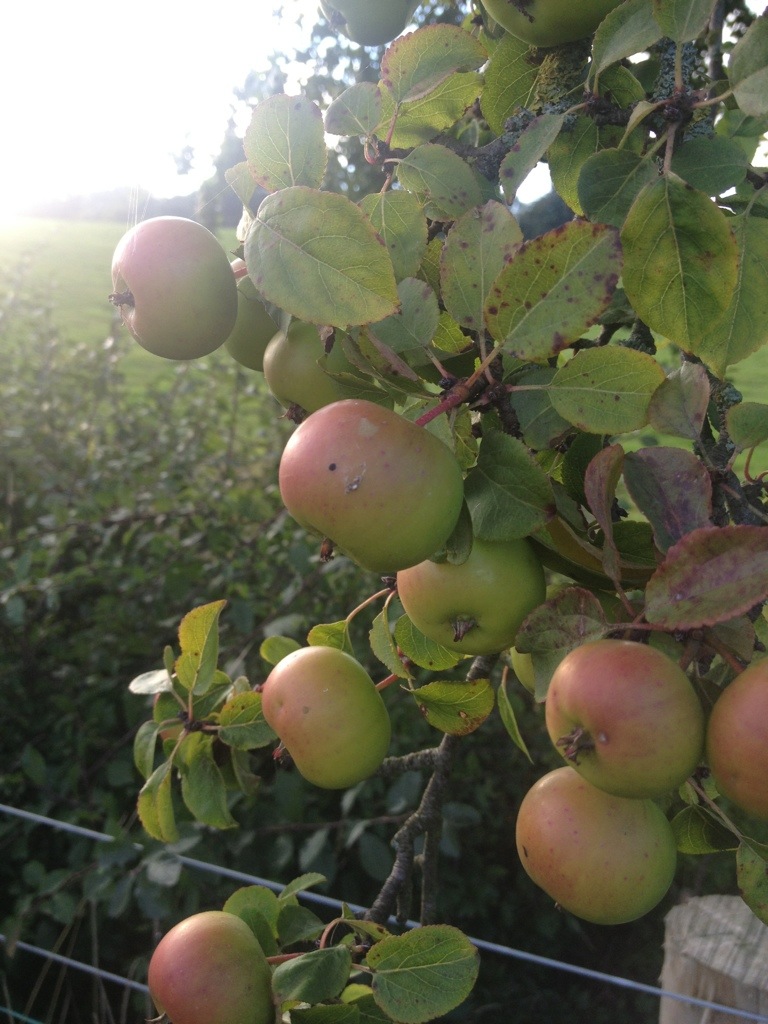
Taken while on Equinox Camp with amazing friends. The sun shone hot and I had to steal an Americanism for my title, simply because of how high I felt; how drunk on happiness and calm and balmy contentment; how warm and exquisite and worldly. We ate well; we talked; we foraged. And in the absence of formal ritual I used acorns, beech nuts and feathers to build a makeshift altar (on top of my car) simply to celebrate the unique balance; the joyous pause; the twilight of the year.

